
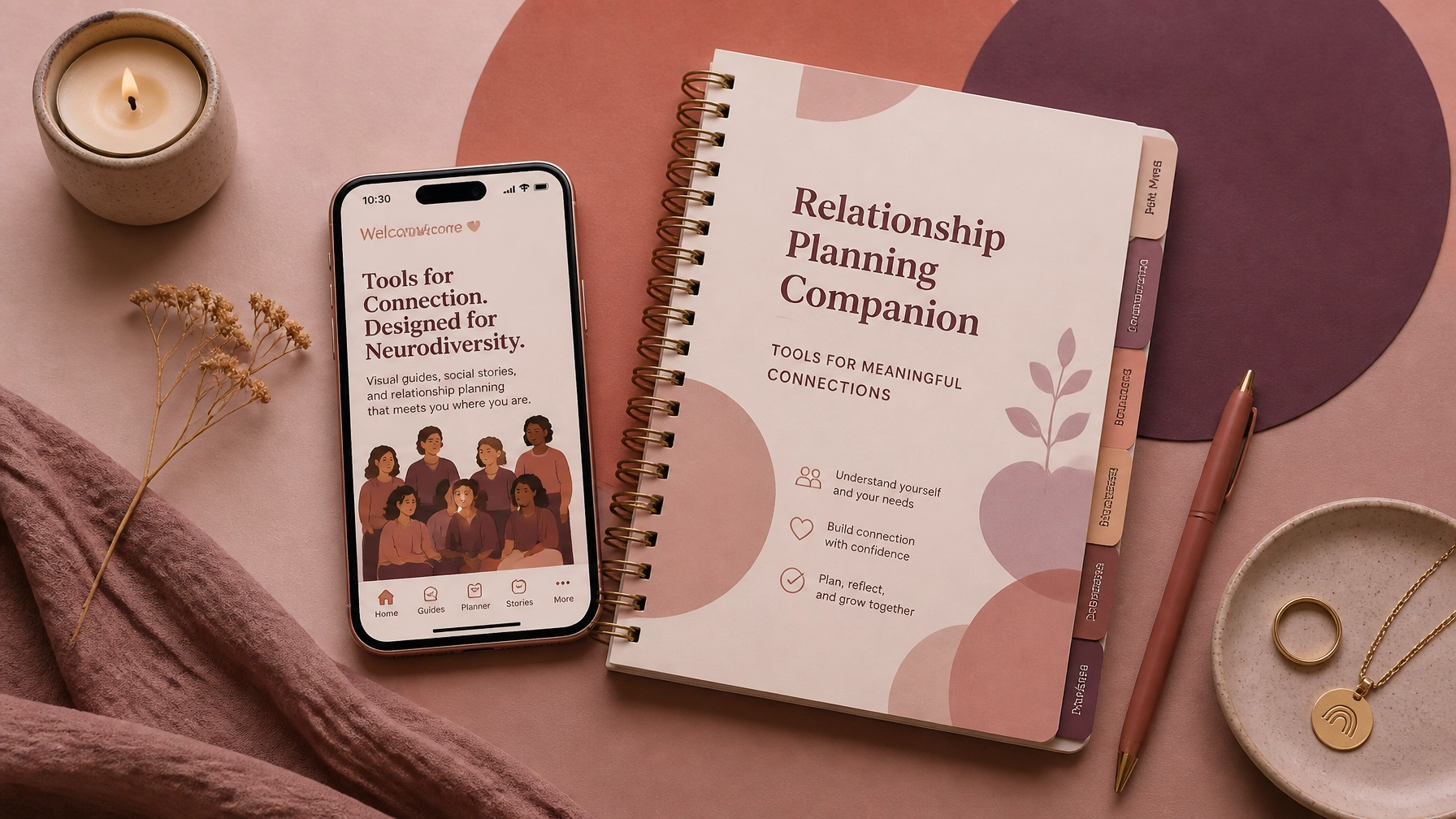
For many neurodivergent adults, navigating the worlds of dating, friendship, romance, and intimacy can feel like trying to play a complex board game without ever being handed the rulebook. Mainstream sex education in schools has historically focused on heteronormative biology and fear-based warnings, largely ignoring the specific cognitive, sensory, and communicative needs of autistic individuals and other neurodivergent learners.
At Capable Hearts, our mission is to reduce social isolation by fostering a safe, inclusive community where adults with diverse abilities can build meaningful relationships with dignity. To achieve this, we must reframe sex education. It is not merely a health class elective or a taboo subject; sex education is an essential adaptive skill that directly supports independence, personal safety, emotional regulation, and self-advocacy.
What Is an Adaptive Skill, and Why Does Sex Ed Fit the Definition?
Adaptive skills are the practical, everyday competencies we all need to live independently, stay safe, and navigate our communities successfully. They include hygiene, meal preparation, financial literacy, and community mobility.
When we classify sex and relationship education as an adaptive skill, we shift our perspective away from discomfort or judgment and focus squarely on practical life preparation. Just as you need explicit instruction on how to manage a bank account or cross a busy street safely, you need concrete guidance on:
- Recognizing your own body signals and physical boundaries.
- Understanding the difference between public and private spaces.
- Navigating consent in both romantic and platonic contexts.
- Recognizing subtle signs of emotional manipulation or coercion.
When these skills are left untaught or assumed to be "intuitive," neurodivergent adults are left vulnerable to exploitation, misunderstandings, and unnecessary social anxiety.
Moving Beyond Vague Metaphors: The Need for Explicit Instruction
Traditional sex education relies heavily on euphemisms, unspoken social rules, and vague metaphors (like "the birds and the bees"). For autistic and neurodivergent adults, this ambiguity causes confusion.
Effective adaptive education requires absolute clarity and concrete terminology:
- Use factual language: Teach correct anatomical terms rather than playful slang or vague descriptors.
- Incorporate visual supports: Use diagrams, high-contrast infographics, and structured social stories to make abstract concepts tangible.
- Acknowledge sensory profiles: Intimacy and physical touch involve sensory processing. Discuss how different textures, sounds, lighting, and temperatures can influence comfort levels and emotional regulation.

When you understand how your unique sensory and cognitive profile interacts with dating and relationships, you gain the confidence to communicate your needs clearly. If you want to dive deeper into why standard platforms often fall short, read our guide on why mainstream dating apps fail neurodivergent users and what to use instead.
Core Pillars of Neuro-Inclusive Sex and Relationship Education
To build true dating confidence and safety, adaptive sex education should focus on several foundational pillars:
1. Consent and Bodily Autonomy
Consent must be taught as an active, ongoing, and enthusiastic agreement. For neurodivergent adults, learning how to give, check for, and withdraw consent is paramount.
- Rehearse scripts: Practice clear phrases for saying "yes," "no," or "I need a moment to think."
- Honor personal boundaries: Understand that physical touch and emotional disclosure require explicit mutual comfort, regardless of past relationship history.
2. Recognizing Safe vs. Unsafe Relationships
Safety education must go beyond obvious danger scenarios and address subtle red flags.
- Identify coercion: Learn what pressure, guilt-tripping, and boundary-pushing look and feel like in real life.
- Seek support: Know who to contact when a relationship feels uncomfortable or unsafe.
3. Understanding Social-Sexual Norms
Navigating public versus private behavior can be challenging when social cues are misunderstood.
- Context matters: Discuss which topics and physical expressions belong in private spaces versus public environments.
- Relationship tiers: Learn the distinct behavioral boundaries between acquaintances, friends, romantic partners, and family members.
How BCBA Coaching and Supportive Technology Bridge the Gap
Learning adaptive social-sexual skills does not have to happen alone. Professional guidance from Board Certified Behavior Analysts (BCBAs) offers structured, compassionate, and individualized support. BCBAs specialize in breaking down complex interpersonal dynamics into manageable steps through task analysis, role-playing, and executive-function strategies.
Furthermore, technology can provide a supportive bridge. On platforms designed with accessibility in mind, you can clearly define your preferences, communicate at your own pace, and practice setting intentional boundaries before meeting someone in person.

For practical advice on entering the dating world with confidence, check out our article on dating with a disability: 10 things you should know before downloading an app.
Practical Steps to Build Your Relationship Skills Today
If you are a neurodivergent adult, a family member, or a support professional looking to foster healthier relationship skills, here are immediate, actionable steps you can take:
- Assess your goals: Identify what areas feel most confusing or stressful: whether it is online safety, setting boundaries, or initiating conversation.
- Utilize structured resources: Look for autism-informed sex education materials that use visual guides, social stories, and clear scripts.
- Practice self-advocacy: Remember that you have the absolute right to take breaks, ask clarifying questions, and dictate the pace of any relationship.
- Join a supportive community: Surround yourself with peers and professionals who understand neurodiversity and celebrate your authentic self. Visit our main blog page for more educational resources.

Conclusion
Sex education is not a luxury or an afterthought: it is a vital adaptive skill that empowers neurodivergent adults to navigate intimacy, friendship, and personal safety with dignity and autonomy. By replacing vague metaphors with explicit instruction, honoring sensory needs, and leaning on expert coaching and safe community spaces, we can transform the dating experience into one defined by confidence, mutual respect, and genuine connection.
You deserve a space where you are understood, supported, and empowered to build the relationships you desire. Explore our Capable Hearts platform today to take your next step forward in a safe, inclusive community.


